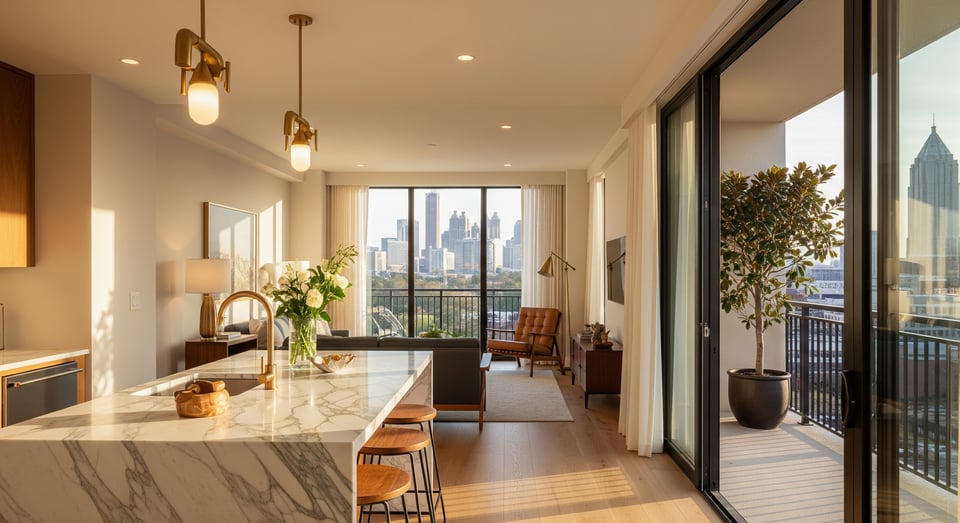
Welcome to
Welcome to
499,287 people live in Atlanta, where the median age is 34 and the average individual income is $64,063. Data provided by the U.S. Census Bureau.
Total Population
Median Age
Population Density Population Density This is the number of people per square mile in a neighborhood.
Average individual Income
A dynamic Southern metropolis known for its cultural influence, economic strength, and diverse neighborhoods, Atlanta offers a refined yet vibrant lifestyle that appeals to professionals, families, and investors alike. As the capital of Georgia and a major hub for business, media, and technology, the city blends historic charm with modern development—featuring award-winning dining, thriving arts districts, and an ever-evolving skyline.
Spanning a wide metropolitan footprint, Atlanta is anchored by distinctive neighborhoods such as Buckhead, Midtown, Virginia-Highland, and Inman Park—each offering its own character and lifestyle appeal. Residents enjoy connectivity via major highways like I-75, I-85, and I-285, as well as access to Hartsfield-Jackson Atlanta International Airport, one of the busiest in the world. From BeltLine living and walkable urban districts to estate homes in tree-lined enclaves, Atlanta’s real estate market offers both versatility and long-term growth potential.
| Key Facts about Atlanta, GA | |
|---|---|
| Area | ~134 sq mi (city proper) |
| County | Fulton County (partially DeKalb County) |
| Established | 1837 (incorporated as a city in 1847) |
| Population (recent est.) | ~510,000 (city) • 6M+ (metro area) |
| Notable Neighborhoods | Buckhead • Midtown • Downtown • Virginia-Highland • Inman Park • West Midtown |
| Signature Attractions | Atlanta BeltLine • Piedmont Park • Georgia Aquarium • High Museum of Art • Mercedes-Benz Stadium • Fox Theatre |
| Main Roads | I-75 • I-85 • I-20 • I-285 • Peachtree Street corridor |
From luxury high-rise residences to historic homes and expansive suburban estates, Atlanta offers a compelling blend of culture, connectivity, and investment opportunity—making it one of the Southeast’s most desirable real estate markets.
Atlanta sits in the heart of the Southeastern United States and serves as a major economic, cultural, and transportation hub. The city’s neighborhoods—from Buckhead and Midtown to Inman Park and West Midtown—are connected by an extensive network of highways, rail, and pedestrian corridors, offering both urban accessibility and suburban convenience.
Residents benefit from Hartsfield-Jackson Atlanta International Airport, one of the busiest airports globally, along with MARTA rail and bus systems that link key districts. The Atlanta BeltLine further enhances connectivity by providing walkable and bike-friendly pathways through some of the city’s most desirable neighborhoods.
| Connectivity & Transportation — Atlanta, GA | |
|---|---|
| Location Map & City Overview | Major Southeastern U.S. city anchored by a dense urban core and expansive metro region. Key districts include Buckhead, Midtown, and Downtown, connected by major interstates and transit corridors. The Atlanta BeltLine provides a defining loop for walkability and redevelopment. |
| Nearby Areas & Communities |
|
| Attractions & Points of Interest |
|
| Public Transport |
|
| Road Access & Main Highways |
|
| Typical Drive Times* |
*Traffic conditions can vary significantly
|
| Parking | Metered street parking and structured garages are common in Midtown, Downtown, and Buckhead. Residential neighborhoods often provide private driveways or community parking. Event venues and commercial districts can experience high demand. |
| Walking & Cycling | Walkability is strongest in Midtown, Inman Park, and along the Atlanta BeltLine. Cycling infrastructure continues to expand, with dedicated trails and bike-friendly corridors connecting key districts. |
| Taxi & Ride Apps | Uber and Lyft are widely available throughout the metro area. Traditional taxi services, executive car services, and private chauffeurs are also readily accessible. |
| Airport Access |
|
| Accessibility & EV | Public transit stations and major attractions offer ADA accessibility. EV infrastructure continues to expand, with Level 2 and DC fast chargers available in commercial centers, residential developments, and along major corridors. |
Atlanta combines global connectivity with diverse neighborhood access—offering a balance of urban mobility, walkable districts, and convenient travel options that support both everyday living and long-term investment appeal.
Atlanta’s real estate market continues to show strong demand driven by population growth, corporate relocation, and lifestyle appeal. The market features a diverse mix of luxury high-rises, historic homes, and modern single-family residences. As of mid–late 2025, the citywide median sale price is around $420K with a median price per sq. ft. near $260. Homes typically spend 30–50 days on market, though prime properties in areas like Buckhead and Midtown move more quickly. Pricing varies significantly by neighborhood, with luxury enclaves commanding multimillion-dollar values, while emerging areas offer more accessible entry points. Rental demand remains strong due to steady job growth and a large professional population.
| Property Type | Median Price (USD) | Price per Sq.Ft (USD) | Average Rent (USD/month) | Rental Yield |
|---|---|---|---|---|
| 2BR Condo / High-Rise | $380,000 (est.) | $260 | $2,100 | 6.6% (est.) |
| 2–3BR Townhome | $450,000 (est.) | $260 | $2,400 | 6.4% (est.) |
| 3BR Single-Family Home | $525,000 (est.) | $260 | $2,900 | 6.6% (est.) |
| 4BR Luxury Home (Buckhead / Midtown) | $1,200,000 (est.) | $300+ | $5,500 | 5.5% (est.) |
Methodology & Notes: Median sale price ($420K) and $260/sq.ft. reflect 2025 city-level averages across Atlanta. Segment pricing estimates are derived from typical property types across Buckhead, Midtown, and surrounding neighborhoods. Rental data reflects current averages across urban core and near-suburban areas. Yield estimates vary by location, property condition, and proximity to employment centers.
Life in Atlanta blends urban energy with Southern charm. As one of the fastest-growing cities in the U.S., Atlanta offers a dynamic mix of walkable districts, cultural institutions, and residential enclaves. From the BeltLine’s connected neighborhoods to Buckhead’s luxury appeal, the city supports a lifestyle that balances professional opportunity with everyday convenience and recreation.
Major Southeastern U.S. city with a diverse metro footprint. Key corridors include I-75, I-85, I-20, and GA-400, with urban anchors in Midtown, Downtown, and Buckhead.
Diverse and fast-growing. Neighborhoods range from historic districts like Inman Park to modern high-rise communities, each offering distinct character and lifestyle appeal.
A nationally recognized culinary scene featuring award-winning chefs, Southern classics, and global cuisine. From fine dining in Buckhead to food halls and local gems citywide.
Served by Atlanta Public Schools and top private institutions. Higher education includes Georgia Tech, Emory University, and Georgia State University.
Wide mix of high-rise condos, renovated historic homes, and suburban-style properties. Premium pricing in Buckhead and Midtown, with emerging areas offering growth potential.
MARTA rail and bus systems connect major districts, while the BeltLine supports walking and cycling. Driving remains common, with access to a major international airport.
Humid subtropical climate with hot summers, mild winters, and vibrant spring and fall seasons. Green spaces remain active year-round.
Shopping centers, entertainment districts, parks, and cultural venues are widely accessible. Luxury retail hubs include Lenox Square and Phipps Plaza.
Young professionals, families, and entrepreneurs contribute to a diverse and growing population supported by strong job markets in tech, media, and healthcare.
Strong economy, cultural diversity, major airport access, and a wide range of housing options make Atlanta attractive for both living and investment.
Traffic congestion, summer humidity, and varying commute times are common considerations depending on neighborhood and lifestyle preferences.
Piedmont Park, the BeltLine, Chattahoochee River trails, and nearby mountains provide year-round options for recreation, fitness, and outdoor exploration.
Atlanta’s lifestyle offers a balance of urban sophistication and everyday livability—walkable neighborhoods, cultural depth, and strong connectivity create a compelling environment for both residents and investors.
Atlanta offers a comprehensive range of amenities—from advanced healthcare and upscale retail to fitness, business hubs, and cultural institutions. Below are key highlights that support both everyday convenience and long-term lifestyle appeal in one of the Southeast’s most dynamic cities.
Families in Atlanta are primarily served by Atlanta Public Schools (APS), along with highly regarded suburban districts such as Fulton County Schools and DeKalb County School District. The area also offers a wide range of private, charter, and independent schools known for strong academics and specialized programs.
Many schools emphasize college-preparatory programs, AP/IB coursework, STEM innovation, arts, and athletics. Families benefit from diverse educational pathways across urban and suburban communities. Always confirm zoning, admissions, and program availability before enrolling.
| School / Preschool | Type | Location | Highlights |
|---|---|---|---|
| Morningside Elementary School | Public (K–5) — APS | Midtown | Highly rated neighborhood school with strong academics, arts programs, and community involvement. |
| Springdale Park Elementary | Public (K–5) — APS | Inman Park | Walkable location, strong parent engagement, and enrichment-focused curriculum. |
| Heards Ferry Elementary | Public (K–5) — Fulton County | Sandy Springs | Top-performing school known for academic excellence and STEM integration. |
| David T. Howard Middle School | Public (6–8) — APS | Old Fourth Ward | Strong academic programs with arts, athletics, and modern campus facilities. |
| Sutton Middle School | Public (6–8) — APS | Buckhead | Feeds into top high schools; known for rigorous coursework and extracurriculars. |
| Midtown High School | Public (9–12) — APS | Midtown | IB program, strong arts focus, and proximity to cultural institutions. |
| North Atlanta High School | Public (9–12) — APS | Buckhead | Large modern campus with IB curriculum, athletics, and global studies programs. |
| Riverwood International Charter School | Public Charter (9–12) | Sandy Springs | International studies focus, AP/IB offerings, and strong college prep outcomes. |
| The Westminster Schools | Private (K–12) | Buckhead | Elite independent school with rigorous academics, arts, and athletics. |
| Pace Academy | Private (K–12) | Buckhead | College-prep curriculum with leadership, arts, and innovation programs. |
| The Lovett School | Private (K–12) | Buckhead | Strong academics, community focus, and well-rounded extracurriculars. |
| Woodward Academy Early Learning | Private Preschool | College Park | Structured early education with strong academic foundations. |
| Montessori Options (citywide) | Private Preschool / K | Atlanta Metro | Montessori-based programs focusing on independence and hands-on learning. |
Districts: Atlanta Public Schools (APS), Fulton County Schools, DeKalb County School District. Tip: School zoning, admissions criteria, and program availability vary by neighborhood—verify directly with schools or districts before making decisions.
Atlanta remains one of the Southeast’s most closely watched real estate markets, supported by a large and diversified economy, steady population inflows, and a broad mix of urban, luxury, and investment-oriented housing. The city attracts everyone from owner-occupants and relocating professionals to long-term investors seeking rental demand and neighborhood appreciation. Recent market data places Atlanta’s median home price in the high-$300Ks, while premium submarkets such as Buckhead continue to command substantially higher pricing. This layered market structure gives buyers multiple entry points, from condos and intown townhomes to luxury single-family residences.
Why Atlanta? The city benefits from deep employment drivers across finance, healthcare, logistics, film, education, and technology, along with international connectivity through Hartsfield-Jackson Atlanta International Airport. While the broader market has normalized compared with peak-pandemic conditions, Atlanta still shows resilient pricing and strong rental fundamentals. Buckhead, Midtown, and Eastside neighborhoods continue to draw luxury and lifestyle-focused buyers, while the wider city remains attractive for investors looking for scale, relative affordability, and long-term upside in a major metro.
| Market Segment | Median Price | YOY Change | Days on Market |
|---|---|---|---|
| Atlanta | $385K | +1.3% | 86 days |
| Buckhead | $733K | -13.7% | 81 days |
| Midtown | $379K | Market-specific | Varies |
| Eastside | $535K | Market-specific | Varies |
Atlanta offers several compelling advantages for real estate investors. The city’s overall pricing is still far below coastal gateway markets, yet it benefits from large-scale economic drivers and deep rental demand. Neighborhood variation is one of Atlanta’s biggest strengths: buyers can target luxury inventory in Buckhead, intown condo opportunities in Midtown and Downtown, or higher-value single-family housing in Eastside and surrounding residential districts. That flexibility makes the market appealing to both long-hold and lifestyle-oriented investors.
Key Investment Highlights:
Whether targeting luxury homes in Buckhead, condominiums in Midtown, or move-up inventory across Atlanta’s established neighborhoods, the city presents a well-rounded investment case. It combines big-city economic depth with multiple real estate price bands, giving buyers exposure to a market that remains nationally relevant, regionally dominant, and positioned for long-term demand.
As one of the South’s most influential cities, Atlanta offers a lifestyle that blends urban sophistication with distinct neighborhood character. From Buckhead’s luxury shopping and Midtown’s cultural energy to the historic charm of Inman Park and Virginia-Highland, each area offers a different rhythm while remaining connected by the city’s growing network of walkable districts.
Housing options range from luxury high-rise residences and estate-style homes to historic bungalows and modern townhomes. Pricing varies widely by neighborhood, with premiums tied to location, school access, architectural character, and proximity to hubs like Buckhead, Midtown, and the BeltLine.
Daily life in Atlanta centers around a strong mix of dining, commerce, and recreation. Residents enjoy chef-driven restaurants, major sports and entertainment venues, trails along the Atlanta BeltLine, and green spaces such as Piedmont Park. Excellent healthcare, expansive retail, and direct access to Hartsfield-Jackson Atlanta International Airport make the city both dynamic and convenient.
With its blend of economic strength, cultural depth, and residential variety, Atlanta remains one of the Southeast’s most compelling destinations for full-time living, relocation, and long-term real estate investment.
Explore Atlanta Real Estate →Atlanta offers a balance of economic opportunity, lifestyle diversity, and long-term growth—making it a compelling place to live, invest, and thrive.
There's plenty to do around Atlanta, including shopping, dining, nightlife, parks, and more. Data provided by Walk Score and Yelp.
Explore popular things to do in the area, including Gulf Mini Mart No, Saucey - Atlanta, and 868 Cafe.
| Name | Category | Distance | Reviews |
Ratings by
Yelp
|
|---|---|---|---|---|
| Dining | 0.28 miles | 0 reviews | 0/5 stars | |
| Dining | 0.69 miles | 0 reviews | 0/5 stars | |
| Dining | 0.69 miles | 0 reviews | 0/5 stars | |
| Dining | 0.85 miles | 0 reviews | 0/5 stars | |
| Dining | 0.9 miles | 0 reviews | 0/5 stars | |
| Dining | 0.99 miles | 0 reviews | 0/5 stars | |
| Active | 0.69 miles | 0 reviews | 0/5 stars | |
| Active | 0.69 miles | 0 reviews | 0/5 stars | |
| Nightlife | 0.3 miles | 0 reviews | 0/5 stars | |
| Beauty | 0.68 miles | 0 reviews | 0/5 stars | |
| Beauty | 0.69 miles | 0 reviews | 0/5 stars | |
| Beauty | 0.69 miles | 0 reviews | 0/5 stars | |
| Beauty | 0.69 miles | 0 reviews | 0/5 stars | |
| Beauty | 0.69 miles | 0 reviews | 0/5 stars | |
| Beauty | 0.69 miles | 0 reviews | 0/5 stars | |
| Beauty | 0.69 miles | 0 reviews | 0/5 stars | |
| Beauty | 0.69 miles | 0 reviews | 0/5 stars | |
| Beauty | 0.69 miles | 0 reviews | 0/5 stars | |
| Beauty | 0.69 miles | 0 reviews | 0/5 stars | |
| Beauty | 0.69 miles | 0 reviews | 0/5 stars | |
| Beauty | 0.7 miles | 0 reviews | 0/5 stars | |
| Beauty | 0.74 miles | 0 reviews | 0/5 stars | |
| Beauty | 0.88 miles | 0 reviews | 0/5 stars | |
| Beauty | 0.91 miles | 0 reviews | 0/5 stars | |
|
|
||||
|
|
||||
|
|
||||
|
|
||||
|
|
||||
|
|
Atlanta has 231,504 households, with an average household size of 2.01. Data provided by the U.S. Census Bureau. Here’s what the people living in Atlanta do for work — and how long it takes them to get there. Data provided by the U.S. Census Bureau. 499,287 people call Atlanta home. The population density is 3,690 and the largest age group is Data provided by the U.S. Census Bureau.
Total Population
Population Density Population Density This is the number of people per square mile in a neighborhood.
Median Age
Men vs Women
Population by Age Group
0-9 Years
10-17 Years
18-24 Years
25-64 Years
65-74 Years
75+ Years
Education Level
Total Households
Average Household Size
Average individual Income
Households with Children
With Children:
Without Children:
Marital Status
Blue vs White Collar Workers
Blue Collar:
White Collar:
Blending strategic expertise with a passion for community impact, this team delivers more than just transactions. With a focus on education, innovation, and equity, clients are empowered to build wealth, make informed decisions, and thrive in every stage of their real estate journey.
Love my Website Design? Want one of your Own?