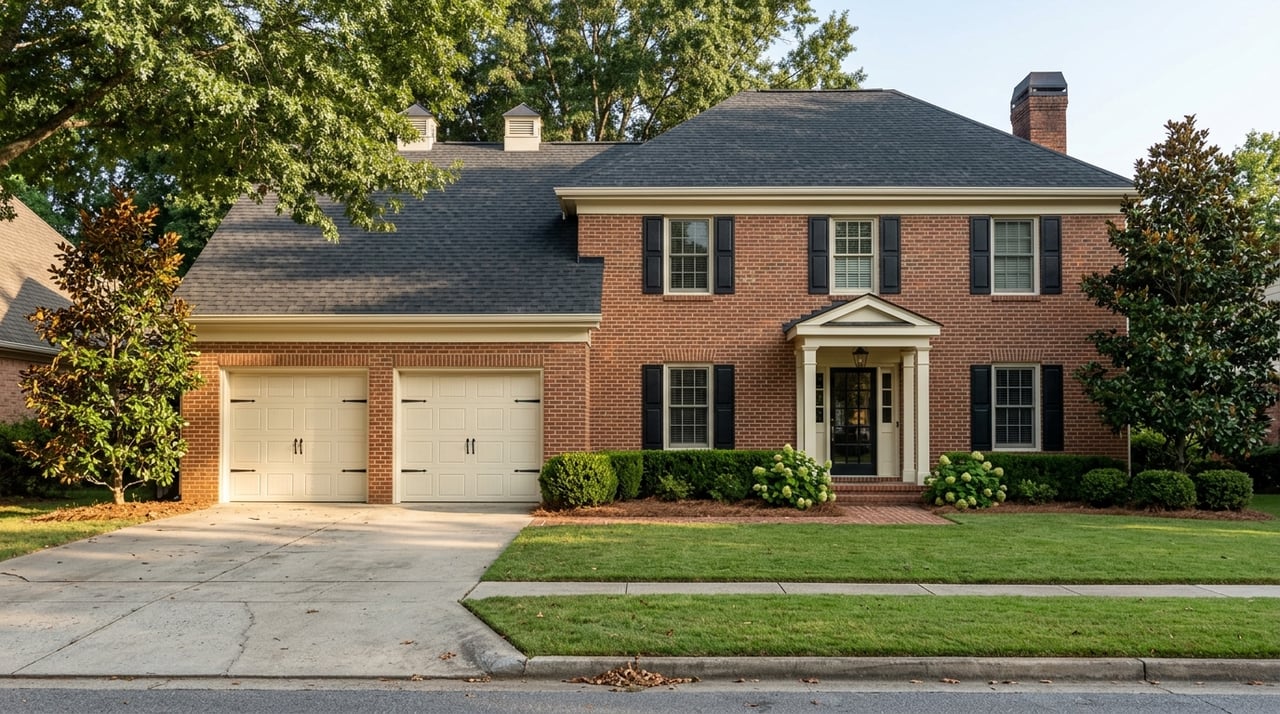
Investor Guide To South Fulton Single-Family Rentals
May 7, 2026
May 7, 2026
If you are looking for a Metro Atlanta rental market that may offer a better rent-to-price starting point than many higher-priced areas, South Fulton deserves a closer look. You want more than a cheap entry price. You want a market with real housing demand, a product mix that fits your strategy, and local rules that will not surprise you after closing. This guide walks you through what to watch in South Fulton single-family rentals, what the numbers suggest, and where careful underwriting matters most. Let’s dive in.
South Fulton is a large and growing city in southwest Fulton County. The U.S. Census Bureau’s 2024 estimate puts the population at 112,003, and the city’s housing profile shows 45,673 total housing units. In the 2020 to 2024 ACS period, the owner-occupied housing unit rate was 71.5%, which points to a market that is still primarily owner-occupied but has a meaningful rental segment.
That rental segment is large enough to matter for investors. South Fulton’s 2025 housing assessment estimates that renters made up 30.8% of households in 2022, and the city has about 6,000 single-family rental homes. For an investor focused on detached houses, that gives you a real operating market to study rather than a one-off opportunity.
One of the clearest reasons South Fulton fits a single-family rental strategy is the housing mix. The city’s draft housing assessment says 78% of the housing stock is single-family detached, 7.9% is single-family attached, 11.2% is multifamily with five or more units, and 2.1% is missing middle housing. In plain terms, detached homes are the dominant product type.
That matters because your acquisition strategy should match the market’s natural supply. In South Fulton, detached homes are the core lane for investors, while attached homes and townhomes may offer a lower-cost entry point. If you are comparing options, the local stock suggests you should start by screening detached homes first, then look at attached product where pricing makes sense.
The age of the housing stock also matters. According to the city’s assessment, 61% of homes were built in 2000 or later. That means you can find newer properties that may be more turnkey, but you should still expect some older homes that may need updates before they are rent-ready.
For many investors, the first question is simple: does the income potential justify a deeper look? Using Census medians as a rough screen, South Fulton’s median gross rent is $1,702 and the median value of owner-occupied housing units is $309,800. That works out to an annual gross-rent-to-value ratio of about 6.6%.
That is not a cap rate, and it should not replace a full underwriting model. Still, it is a helpful way to compare markets quickly. The same rough measure is about 4.5% for Fulton County overall and about 5.5% for Georgia, which suggests South Fulton can look more yield-friendly than the county median.
The city’s 2025 housing assessment supports a similar takeaway. It reports a 2024 average single-family sale price of $320,760. When you pair that with the Census median gross rent, the rough gross-rent-to-price ratio is about 6.4%, which keeps South Fulton in a relatively favorable screening range for many buy-and-hold investors.
No rental market is just about price and rent. You also need to understand who is competing for housing and where affordability pressure is building. South Fulton’s housing assessment says the rental vacancy rate was 6.8% in 2022, while the homeowner vacancy rate was 1.8%.
The same report shows a sharp drop in lower-cost rental supply. The share of rental units costing $1,000 or less fell from 38.3% in 2017 to 7% in 2022. That does not mean every rental home will lease quickly at any price, but it does suggest that affordability pressure has increased and lower-cost options have become much harder to find.
The city’s housing assessment also notes that affordability was a top reason residents chose South Fulton. That is an important clue for positioning. In this market, practical homes with efficient layouts and manageable monthly housing costs may have stronger rental relevance than oversized luxury product.
South Fulton’s housing assessment points to a shortage of smaller homes and diverse housing types. For investors, that creates an important lens for property selection. A renovated smaller home or a well-designed townhome may appeal to renters who want access to the area without stretching their monthly budget too far.
That does not mean larger homes never work. It means you should be careful about assuming premium finishes and extra square footage automatically produce the best returns. In a market where affordability is a major factor, the best-performing asset may be the one that balances condition, layout, and monthly payment most effectively.
A useful way to think about South Fulton is to sort opportunities into three separate buckets:
These are not interchangeable. You should compare expected rent, time-to-lease, turnover risk, and ongoing maintenance separately for each group.
Property taxes are one of the easiest ways to overestimate your cash flow if you are not careful. Fulton County says every property is assessed annually at fair market value, and property owners can view assessments online and appeal them. That makes tax research part of your acquisition work, not something to check after closing.
There is another point that matters even more for rental investors. Fulton County’s homestead guidance says homestead exemptions apply to owner-occupied homes and do not apply to commercial or rental properties. So if you are reviewing a property that is currently owner-occupied, do not underwrite your future rental tax bill using that lower owner-occupant tax treatment.
A South Fulton rental may screen well on gross numbers, but your real return depends on expense discipline. Common rental-property expenses can include insurance, property taxes, mortgage interest, repairs, cleaning and maintenance, management fees, legal and professional fees, utilities, depreciation, and some travel or local transportation tied to the property. The IRS also notes that repairs that keep a property in good working condition are generally treated as expenses.
That broad list matters because many first-pass analyses leave out real recurring costs. If you are buying a house that needs regular landscaping, more frequent repairs, or a heavier turnover budget, your actual performance may look very different from the spreadsheet you built from list price and target rent alone.
South Fulton’s code enforcement priorities reinforce this point. The city lists common violations such as parking on the grass, outside storage, trash and debris, high grass and weeds, and junk vehicles. For single-family rentals, exterior upkeep is not optional, so plan for landscaping, exterior maintenance, and turn costs as recurring line items.
Before you buy, confirm what the property can legally support. South Fulton’s Planning and Zoning page explains that zoning controls permitted uses, setbacks, and building square footage. The city also offers pre-application meetings, zoning certification letters, rezoning, use permits, variances, and a GIS zoning viewer.
That makes zoning research especially important if your business plan includes changes to the home. If you want to add bedrooms, convert space, or reposition the property before leasing it, the city’s planning tools should be part of your due diligence early in the process. A deal can look strong on paper and still become less attractive if your improvement plan does not align with local rules.
If your plan is a traditional long-term lease, your due diligence path is more straightforward. If you are considering a short-term rental strategy, South Fulton now has a separate permit process. The city says that as of 2025, short-term rentals no longer require a special use permit, but they do require the new permit, must be in residential zoning districts, and operating without a permit can lead to fines or suspension.
That means you should not assume a house that works as a long-term rental will automatically work for a short-term rental model. The permit path and operating rules deserve their own review before you commit to that strategy.
Strong investors do not stop at sale comps. South Fulton is a market where local housing data, tax treatment, and zoning details can shape your outcome just as much as the purchase price. A disciplined research process can help you avoid overpaying and underestimating risk.
Here is a practical framework for screening South Fulton rentals:
Start with city and Census data
Review South Fulton’s housing assessment and Census QuickFacts to understand population growth, housing mix, vacancy, and affordability trends.
Study the property type carefully
Separate newer turnkey homes from older renovated homes and lower-end properties with more upkeep risk.
Check lease comps, not just sale comps
Compare recent lease performance, expected rent range, and time-to-lease for similar homes.
Verify tax assumptions
Use Fulton County assessment records and make sure you are not relying on an owner-occupant tax bill for a future rental.
Review zoning before closing
If your plan involves adding space, reconfiguring the home, or changing its use, confirm what is allowed through the city’s planning resources.
Budget for maintenance and compliance
Include recurring exterior upkeep, landscaping, and turnover costs in your operating model.
South Fulton looks like a market where detached homes remain the main rental product and rough rent-to-price screens can compare favorably with the broader county. Population growth, a meaningful base of renter households, and shrinking lower-cost rental supply all support the case for continued investor attention. At the same time, this is not a market for loose assumptions.
Your best results will likely come from disciplined, neighborhood-level analysis. That means pairing rent potential with conservative tax projections, realistic maintenance budgets, and early zoning checks. If you do that well, South Fulton can offer opportunities that align with long-term, community-aware investing rather than quick speculation.
If you want help evaluating South Fulton single-family rental opportunities with a broker-led, neighborhood-first perspective, connect with The Maxwell Haus Residential Agency. We help buyers, sellers, and selective investors make more confident decisions in South Fulton and nearby Fulton County communities.
Stay up to date on the latest real estate trends.


Blending strategic expertise with a passion for community impact, this team delivers more than just transactions. With a focus on education, innovation, and equity, clients are empowered to build wealth, make informed decisions, and thrive in every stage of their real estate journey.
Love my Website Design? Want one of your Own?